Free worldwide shipping on orders over $89

Cart

Your cart is currently empty.

Continue shopping
You May Also Like
1 / 1

White Tara – The Mother of Long Life

$1,004.00 USD
Shipping calculated at checkout.
Size
Quantity

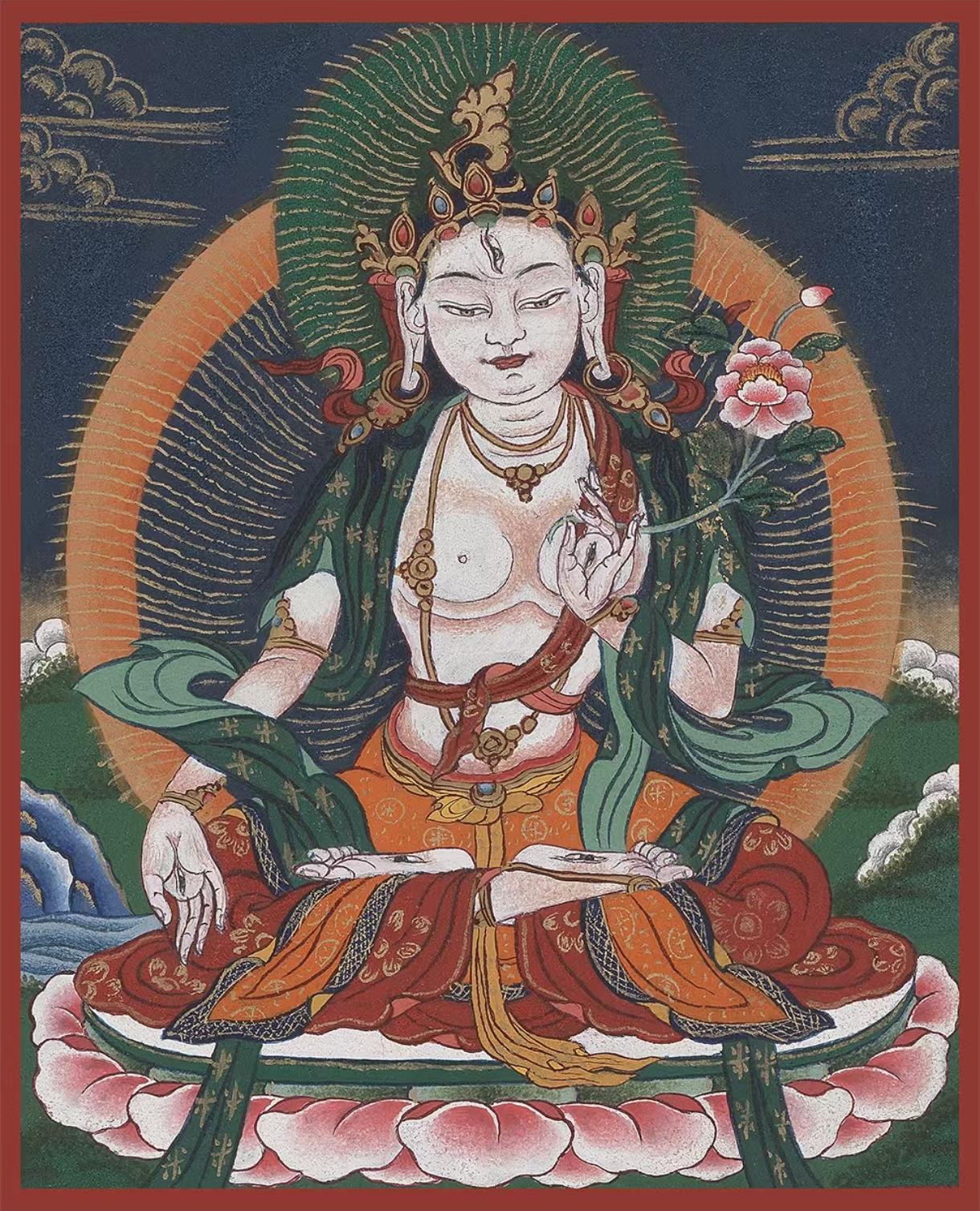
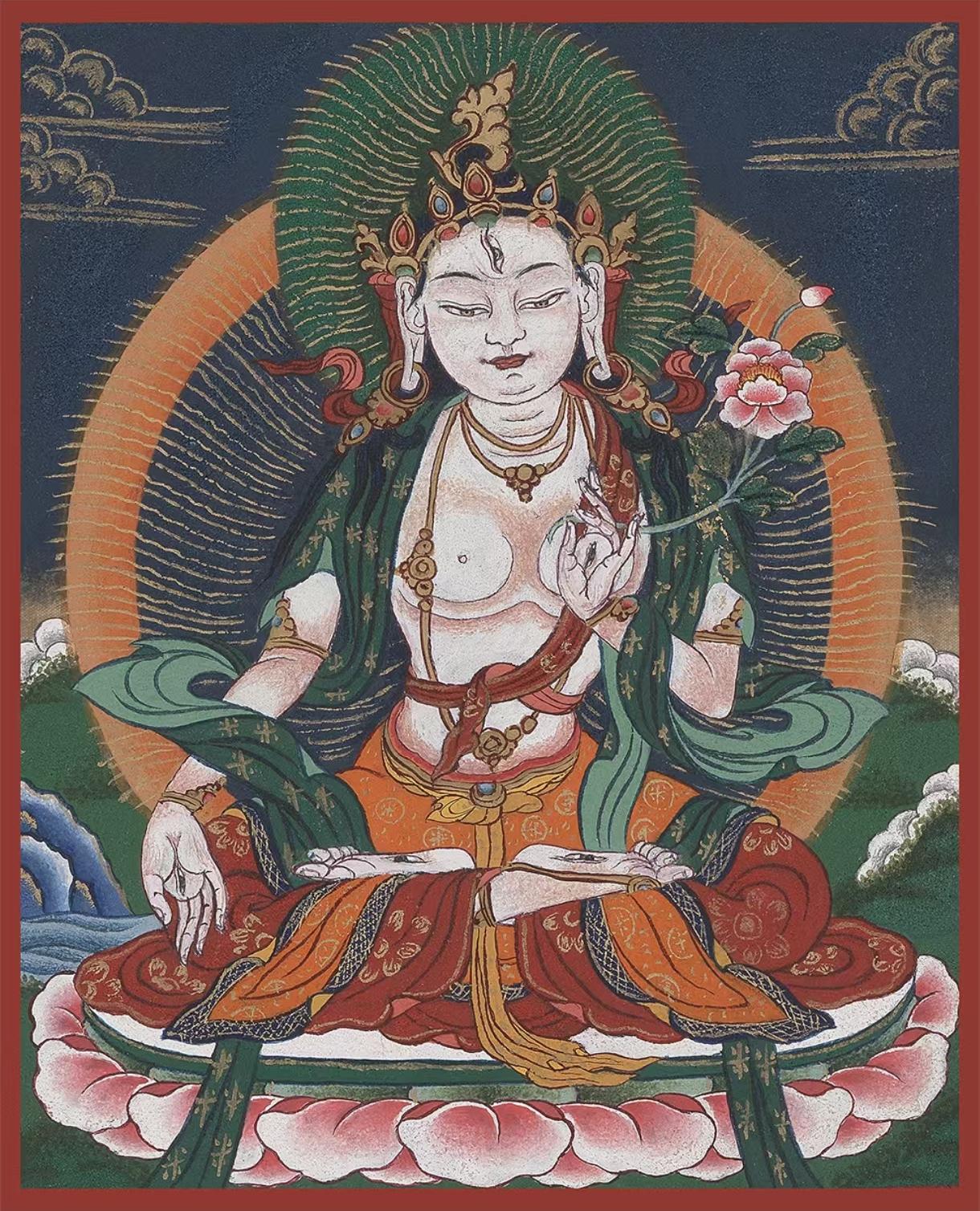
White Tara – The Mother of Long Life

Hand-painted Thangka by Master Artists from Lhasa


Symbolism:
White Tara’s luminous ivory complexion—painted with ground pearl and purified gypsum—signifies pure compassion and longevity. Her seven eyes (on face, palms, and soles) perceive the suffering of all beings, representing omniscient awareness.

Seated in the full lotus posture, she radiates peaceful energy, while the utpala flower in her left hand marks eternal blossoming wisdom. Her youthful appearance reflects timeless vitality, untouched by decay or time.


Devotional Purpose:
Devotees chant her mantra—"Om Tare Tuttare Ture Mama Ayuh Punya Jñana Pustim Kuru Svaha"—to request blessings for long life, merit, and wisdom. Her Thangka is used in healing rituals, especially for recovery from illness and protection of mothers and children.

This piece includes sacred syllables subtly woven into the halo and hidden mantra scrolls placed within the canvas—honoring traditional Tibetan consecration practices.

View more
View less
100% Master's Authentic
Master certificate provided
Mineral pigment, Master handmade
Tibetan Buddhist Thangka

For custom sizing or bespoke design requests, please contact us directly:

WeChat: potalacrafts
Email: potalacraft@gmail.com
White Tara

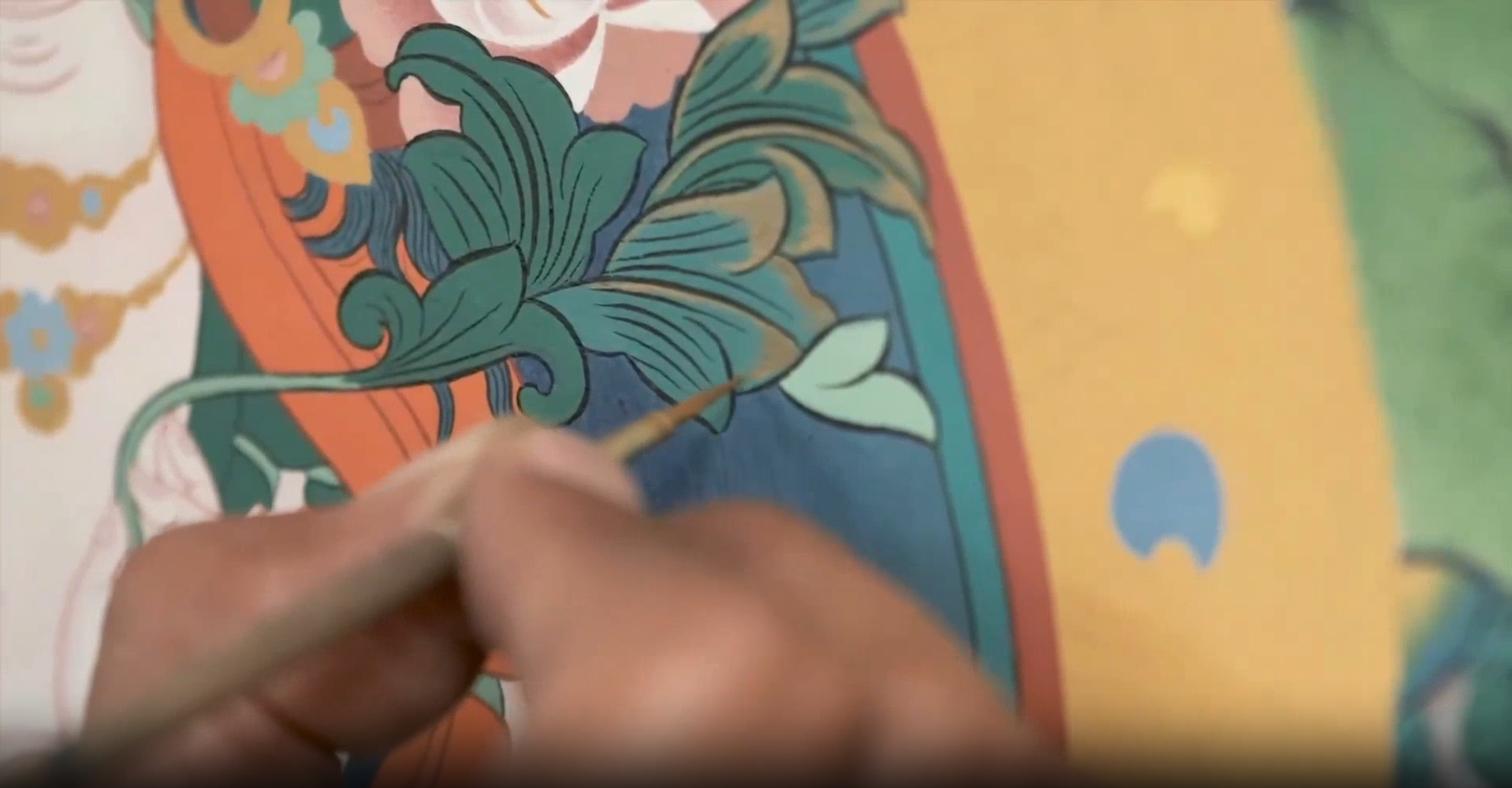
The process of making thangka

Thangka exclusively uses natural materials:

​​Mineral pigments​​: Gold, silver, lapis lazuli (blue), cinnabar (red), malachite (green)
​​Plant-based dyes​​: Saffron (yellow), rhubarb (brown), indigo (blue)
These ensure vibrant colors lasting centuries. For example, gold powder mixed with glue creates luminous details.

You may also like
FAQ
Our customer support is available Monday to Friday
View more
1. ​​What is a Thangka?​​
Thangka is a Tibetan Buddhist religious scroll painting on cotton/silk cloth, traditionally using mineral pigments like gold, silver, malachite, and cinnabar. It serves as both sacred art and a "Tibetan cultural encyclopedia," depicting Buddhist deities, mandalas, historical events, and medical diagrams. Unlike ordinary paintings, its creation involves rituals like chanting sutras and selecting auspicious dates.
2. ​​What materials are used in Thangka pigments?​​

Thangka exclusively uses natural materials:

​​Mineral pigments​​: Gold, silver, lapis lazuli (blue), cinnabar (red), malachite (green)
​​Plant-based dyes​​: Saffron (yellow), rhubarb (brown), indigo (blue)
These ensure vibrant colors lasting centuries. For example, gold powder mixed with glue creates luminous details.

3. ​​Are all Thangkas hand-painted?​​

Yes. Authentic Thangkas are entirely handcrafted:

Master artists sketch outlines using sacred geometric grids.
Apprentices fill colors through 7+ steps: canvas preparation, line drawing, coloring, gold layering, and "eye-opening" rituals. A single piece may take months, with premium works signed by renowned lamas.

4. ​​How to preserve a Thangka?​​
  • ​​Display​​: Use UV-resistant glass frames with ventilation gaps to prevent pigment adhesion.
    ​​Storage​​: Roll with acid-free paper in dry, ventilated areas; avoid humidity and direct sunlight.
    ​​Cleaning​​: Gently dust with soft brushes—never use water or chemicals.

5. ​​Why is Thangka considered culturally significant?​​

Encodes Vajrayana Buddhist philosophy (e.g., mandalas symbolize cosmic order).
Preserves Tibetan history, medicine, and folklore through visual narratives.
Uses sacred iconography: Deities' postures/colors convey specific teachings (e.g., red for compassion, blue for wisdom).