Free worldwide shipping on orders over $89

Cart

Your cart is currently empty.

Continue shopping
You May Also Like
1 / 1

Samantabhadra – The Embodiment of Universal Virtue

$1,000.00 USD
Shipping calculated at checkout.
Size
Quantity

Samantabhadra – The Embodiment of Universal Virtue

Hand-Painted Thangka in the Vajrayana Tradition


Symbolism:
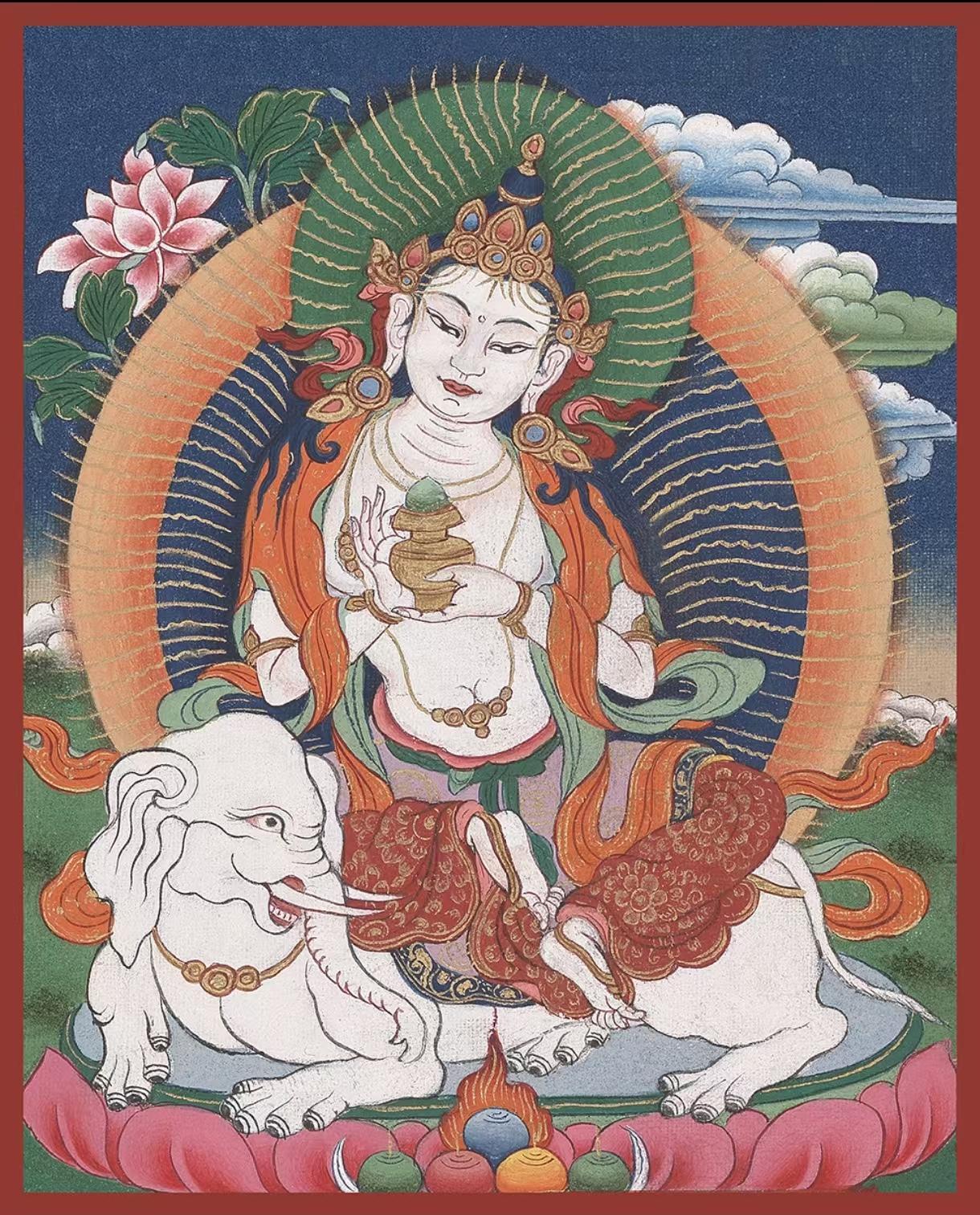
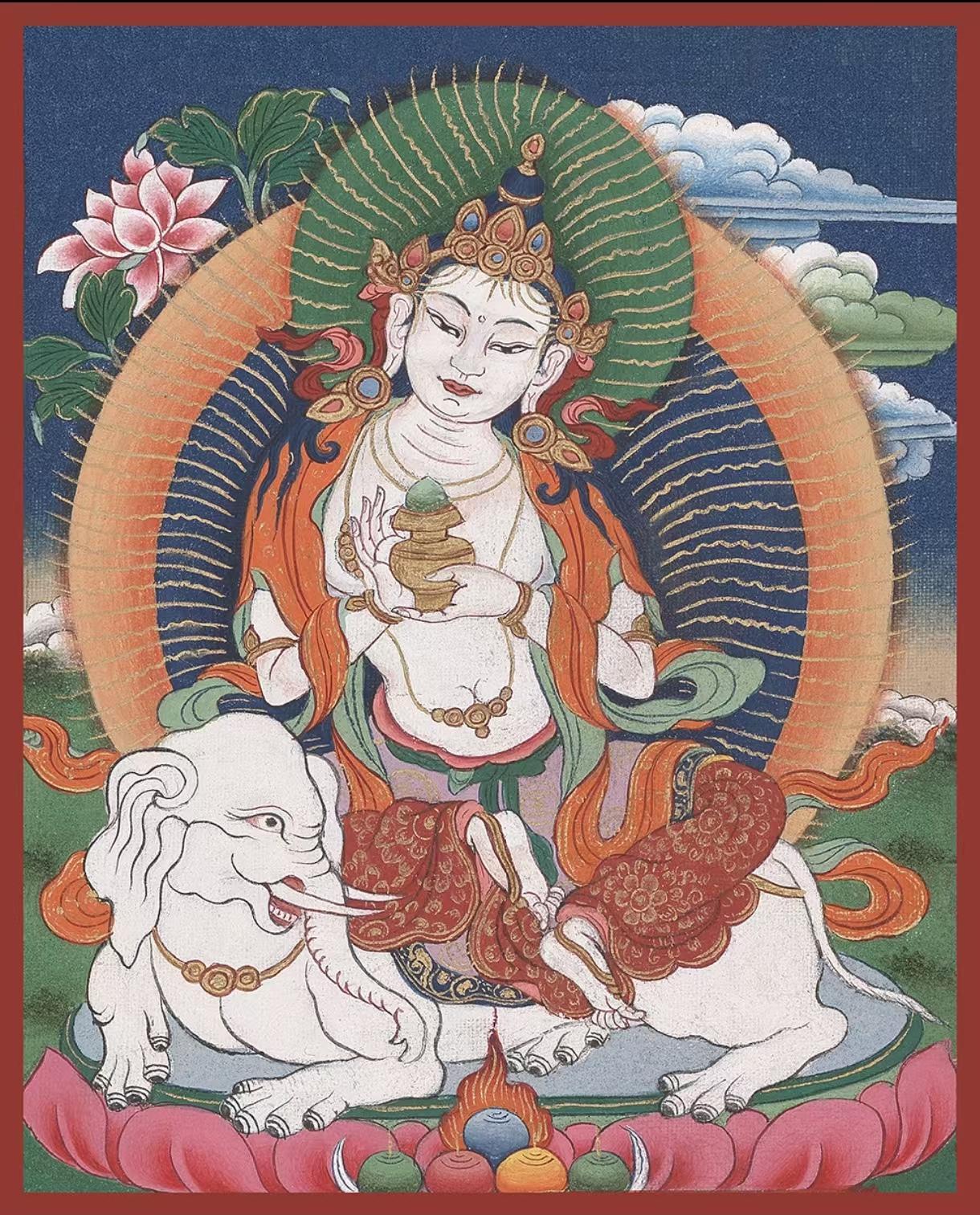
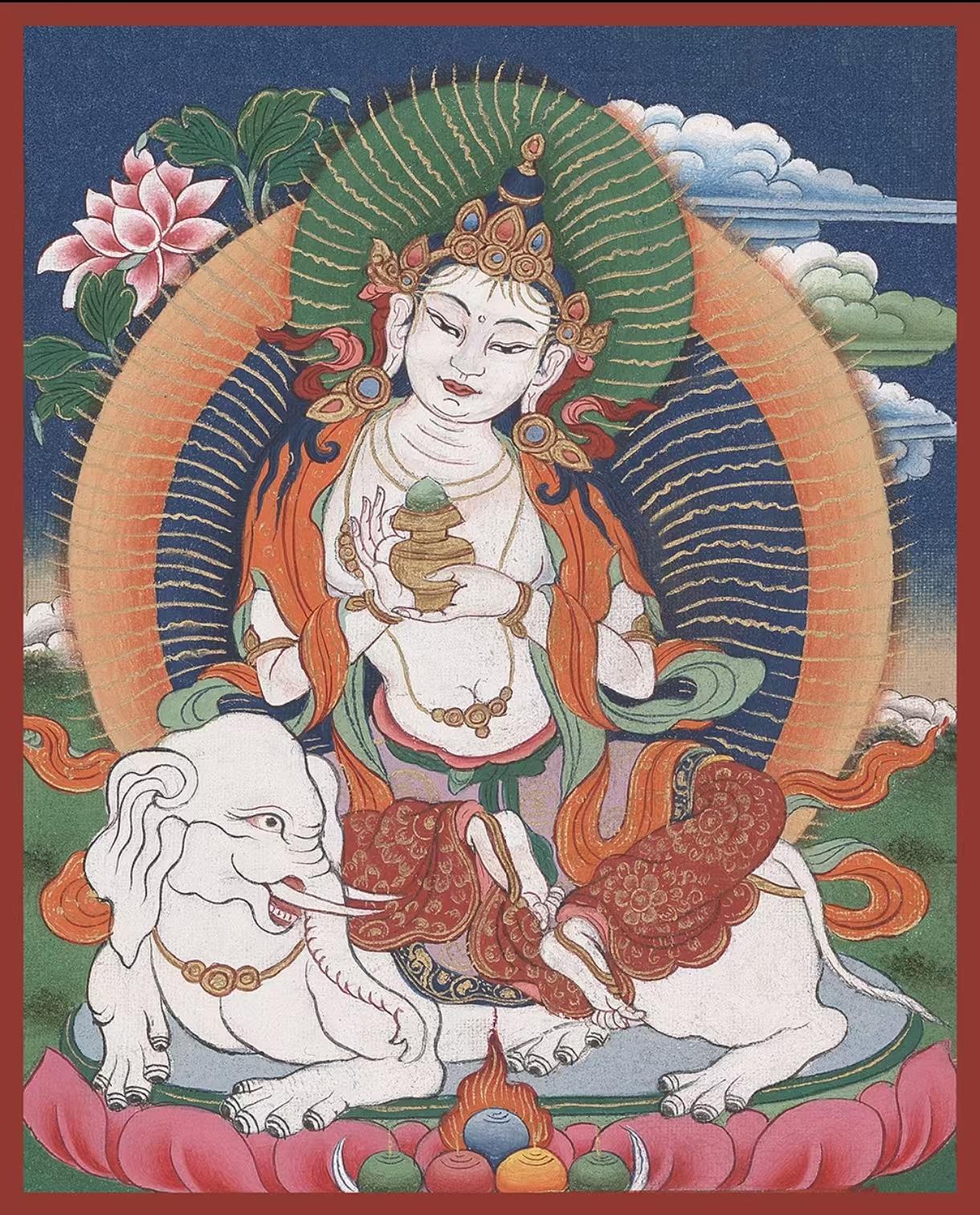
Samantabhadra, the Bodhisattva of Boundless Action, rides a six-tusked white elephant, symbolizing the power of pure intention and unstoppable merit. His serene expression and mudra of aspiration reflect his vow to serve all sentient beings through limitless compassionate deeds.

This thangka portrays him surrounded by emanation clouds and wish-fulfilling jewels, referencing his Ten Great Vows from the Avatamsaka Sutra. The pure white pigment used in his robe is mixed with crushed pearl and natural lime, radiating a calm luminosity that signifies moral purity.


Devotional Purpose:
Practitioners meditate on Samantabhadra to cultivate righteous conduct, endless dedication, and the fulfillment of spiritual aspirations. Reciting his vows is believed to purify karmic traces, aid in rebirth in Sukhavati (the Pure Land), and support the realization of Bodhicitta.

This thangka can serve as a visual embodiment of daily resolve, reminding the viewer of the sacred harmony between wisdom and action. Ideal for altars, Dharma halls, or spaces devoted to mindful practice and ethical living.

View more
View less
100% Master's Authentic
Master certificate provided
Mineral pigment, Master handmade
Tibetan Buddhist Thangka

For custom sizing or bespoke design requests, please contact us directly:

WeChat: potalacrafts
Email: potalacraft@gmail.com
Samantabhadra – The Embodiment of Universal Virtue

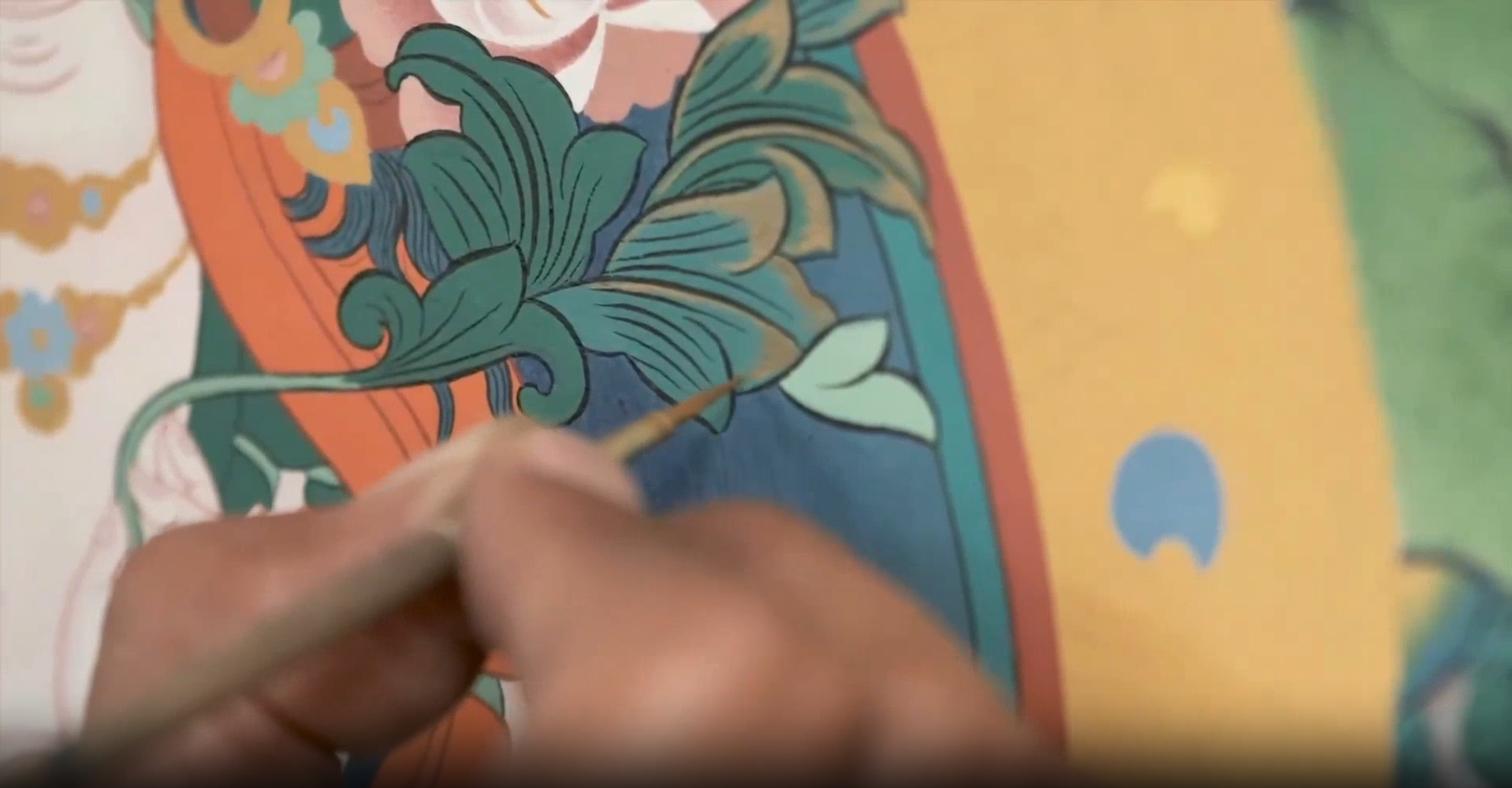
The process of making thangka

Thangka exclusively uses natural materials:

​​Mineral pigments​​: Gold, silver, lapis lazuli (blue), cinnabar (red), malachite (green)
​​Plant-based dyes​​: Saffron (yellow), rhubarb (brown), indigo (blue)
These ensure vibrant colors lasting centuries. For example, gold powder mixed with glue creates luminous details.

You may also like
FAQ
Our customer support is available Monday to Friday
View more
1. ​​What is a Thangka?​​
Thangka is a Tibetan Buddhist religious scroll painting on cotton/silk cloth, traditionally using mineral pigments like gold, silver, malachite, and cinnabar. It serves as both sacred art and a "Tibetan cultural encyclopedia," depicting Buddhist deities, mandalas, historical events, and medical diagrams. Unlike ordinary paintings, its creation involves rituals like chanting sutras and selecting auspicious dates.
2. ​​What materials are used in Thangka pigments?​​

Thangka exclusively uses natural materials:

​​Mineral pigments​​: Gold, silver, lapis lazuli (blue), cinnabar (red), malachite (green)
​​Plant-based dyes​​: Saffron (yellow), rhubarb (brown), indigo (blue)
These ensure vibrant colors lasting centuries. For example, gold powder mixed with glue creates luminous details.

3. ​​Are all Thangkas hand-painted?​​

Yes. Authentic Thangkas are entirely handcrafted:

Master artists sketch outlines using sacred geometric grids.
Apprentices fill colors through 7+ steps: canvas preparation, line drawing, coloring, gold layering, and "eye-opening" rituals. A single piece may take months, with premium works signed by renowned lamas.

4. ​​How to preserve a Thangka?​​
  • ​​Display​​: Use UV-resistant glass frames with ventilation gaps to prevent pigment adhesion.
    ​​Storage​​: Roll with acid-free paper in dry, ventilated areas; avoid humidity and direct sunlight.
    ​​Cleaning​​: Gently dust with soft brushes—never use water or chemicals.

5. ​​Why is Thangka considered culturally significant?​​

Encodes Vajrayana Buddhist philosophy (e.g., mandalas symbolize cosmic order).
Preserves Tibetan history, medicine, and folklore through visual narratives.
Uses sacred iconography: Deities' postures/colors convey specific teachings (e.g., red for compassion, blue for wisdom).