Free worldwide shipping on orders over $89

Cart

Your cart is currently empty.

Continue shopping
You May Also Like
1 / 1

Acala – The Immovable Wisdom King

$1,004.00 USD
Shipping calculated at checkout.
Size
Quantity

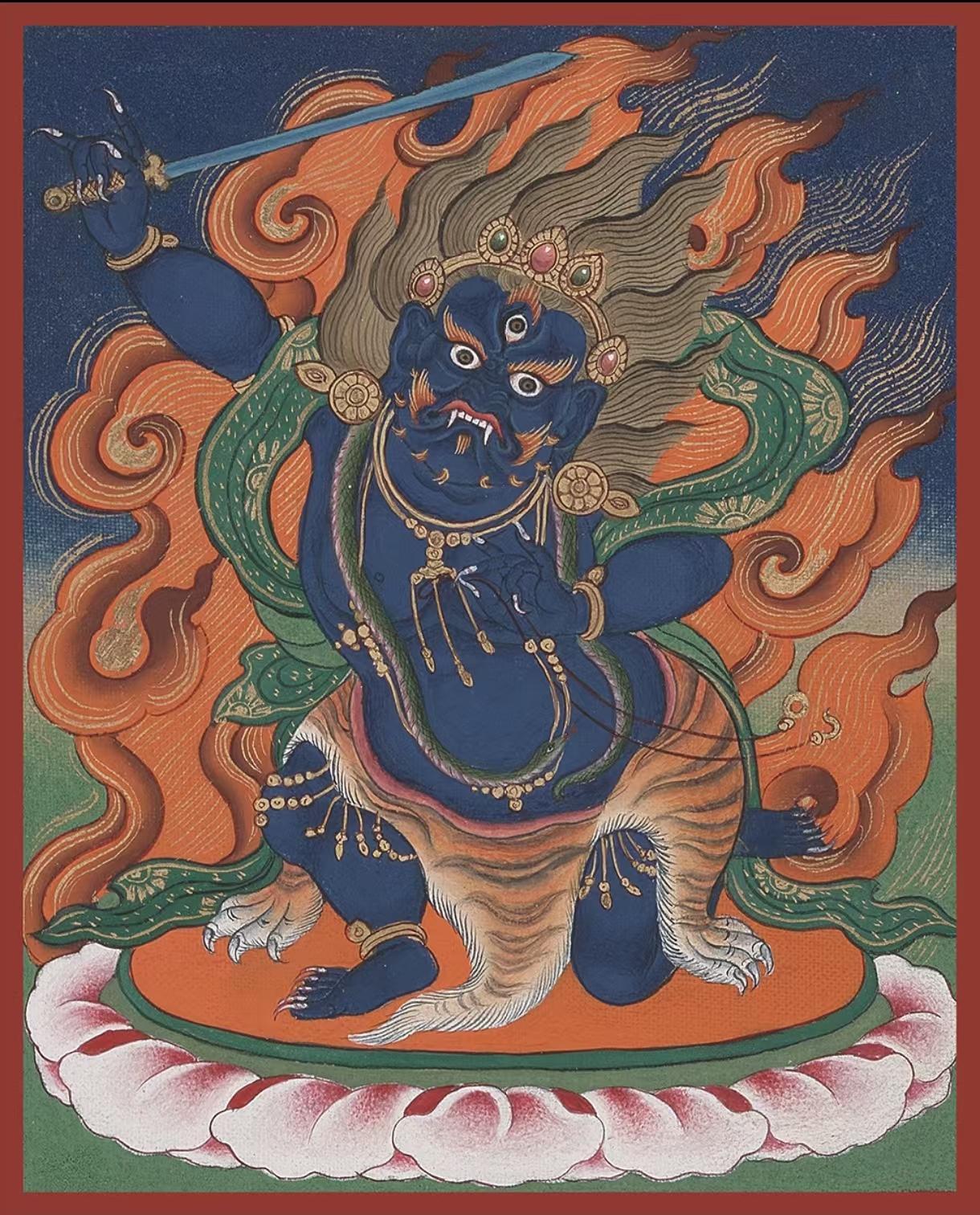
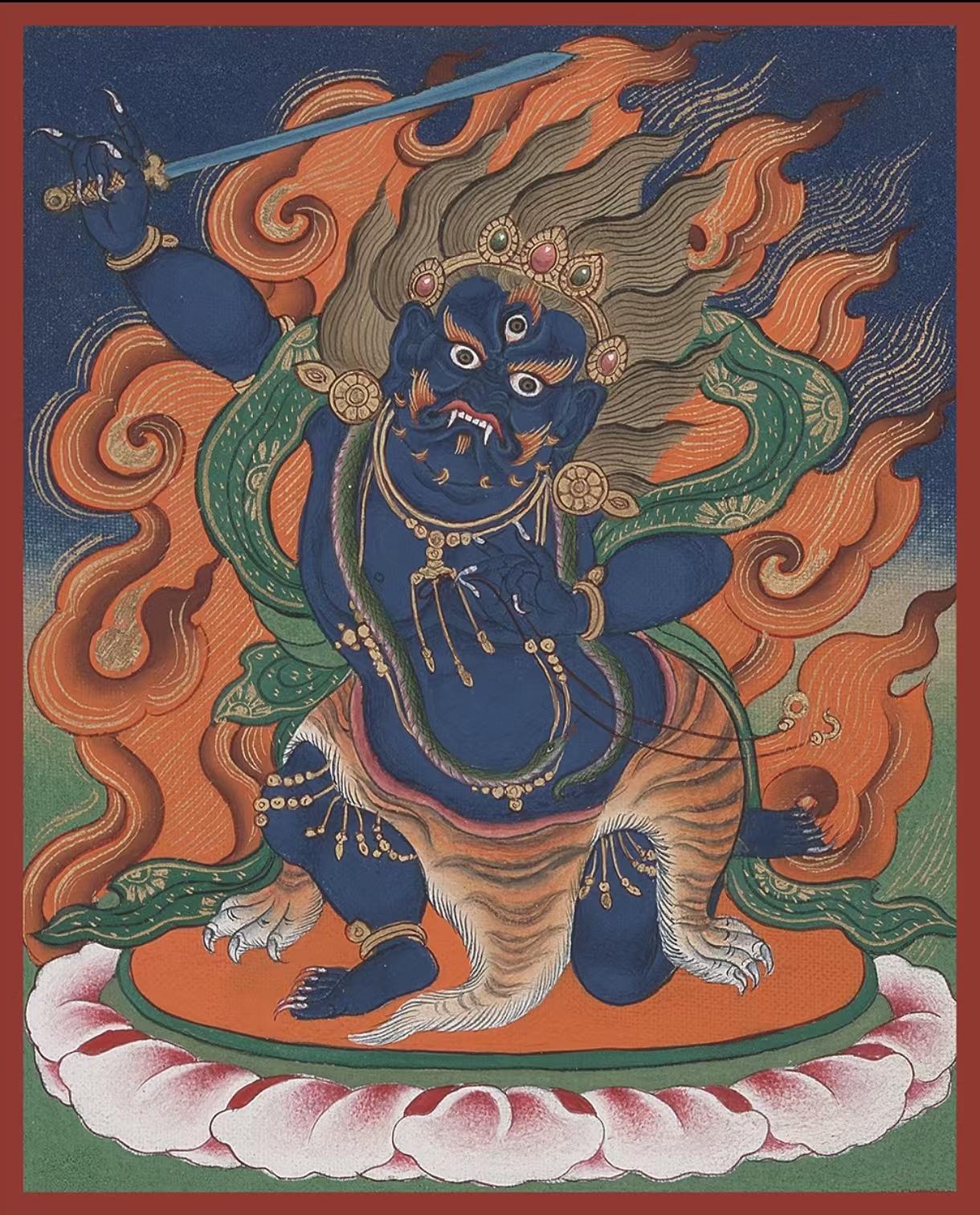
Acala – The Immovable Wisdom King

Hand-painted Thangka in wrathful Vajrayana style


Symbolism:
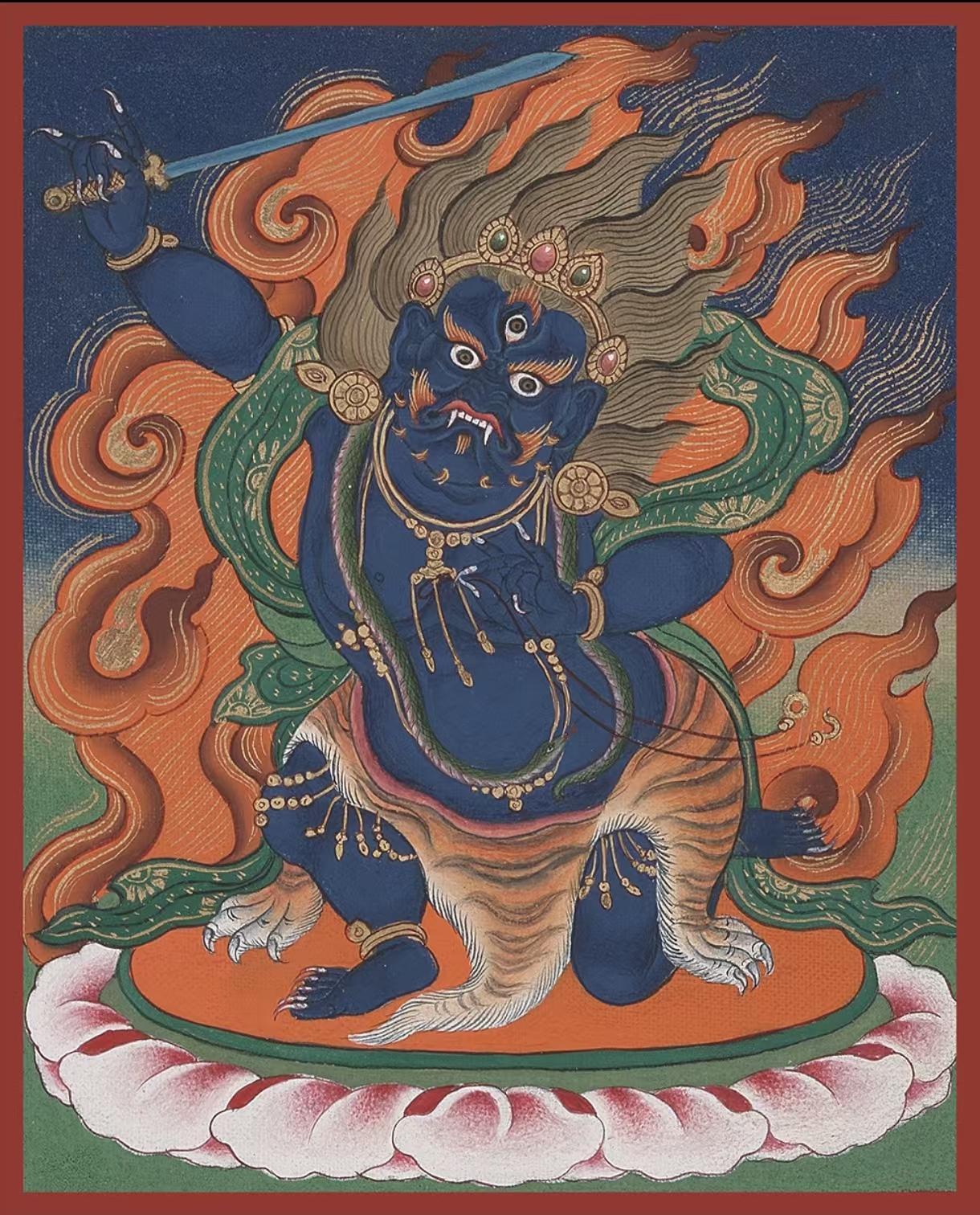
Acala’s blazing blue-black body, painted with rare Tibetan azurite and soot ash, embodies unshakable resolve and fierce compassion. His fanged mouth, furrowed brow, and fiery aureole symbolize his vow to cut through ignorance and ego.

He wields a flaming sword in his right hand to sever delusions, and a lasso in his left to bind negative karma. Seated on a rock base, surrounded by flames, Acala’s form reflects immovability amidst chaos and inner transformation through wrath.


Devotional Purpose:
Invoked as a protector of the Dharma, Acala’s mantra—“Namah samanta vajranam chanda maharoshana sphotaya hum trat hām mām”—is used to destroy inner obstacles, subdue evil, and cultivate inner strength.

His Thangka is often placed in temples and meditation rooms for empowerment rituals, initiation ceremonies, or as a visual aid in fierce compassion practices. Hidden mantra scrolls and fire-inscribed seed syllables are embedded in the canvas to activate its spiritual potency.

View more
View less
100% Master's Authentic
Master certificate provided
Mineral pigment, Master handmade
Tibetan Buddhist Thangka

For custom sizing or bespoke design requests, please contact us directly:

WeChat: potalacrafts
Email: potalacraft@gmail.com
Acala – The Immovable Wisdom King

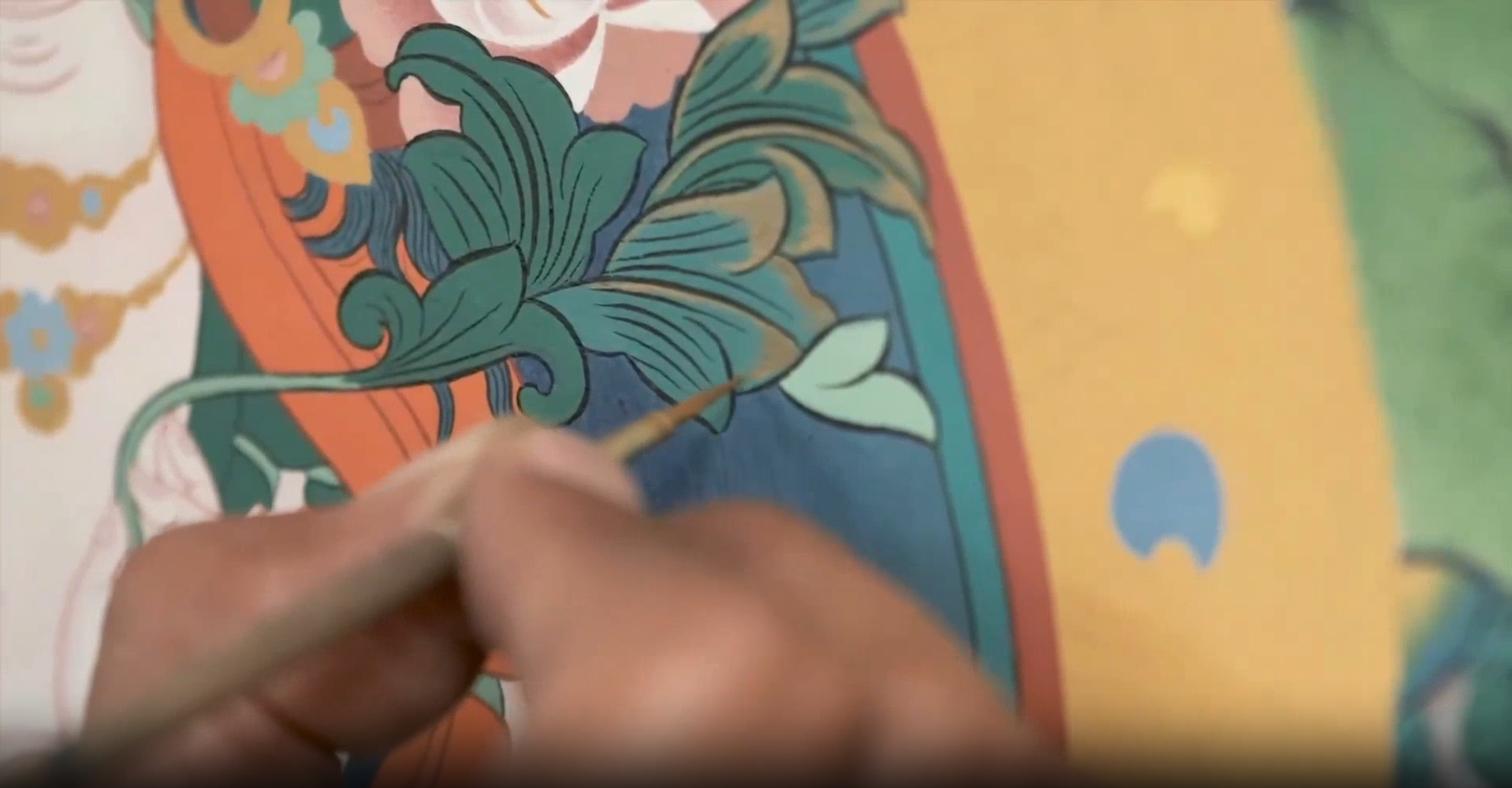
The process of making thangka

Thangka exclusively uses natural materials:

​​Mineral pigments​​: Gold, silver, lapis lazuli (blue), cinnabar (red), malachite (green)
​​Plant-based dyes​​: Saffron (yellow), rhubarb (brown), indigo (blue)
These ensure vibrant colors lasting centuries. For example, gold powder mixed with glue creates luminous details.

You may also like
FAQ
Our customer support is available Monday to Friday
View more
1. ​​What is a Thangka?​​
Thangka is a Tibetan Buddhist religious scroll painting on cotton/silk cloth, traditionally using mineral pigments like gold, silver, malachite, and cinnabar. It serves as both sacred art and a "Tibetan cultural encyclopedia," depicting Buddhist deities, mandalas, historical events, and medical diagrams. Unlike ordinary paintings, its creation involves rituals like chanting sutras and selecting auspicious dates.
2. ​​What materials are used in Thangka pigments?​​

Thangka exclusively uses natural materials:

​​Mineral pigments​​: Gold, silver, lapis lazuli (blue), cinnabar (red), malachite (green)
​​Plant-based dyes​​: Saffron (yellow), rhubarb (brown), indigo (blue)
These ensure vibrant colors lasting centuries. For example, gold powder mixed with glue creates luminous details.

3. ​​Are all Thangkas hand-painted?​​

Yes. Authentic Thangkas are entirely handcrafted:

Master artists sketch outlines using sacred geometric grids.
Apprentices fill colors through 7+ steps: canvas preparation, line drawing, coloring, gold layering, and "eye-opening" rituals. A single piece may take months, with premium works signed by renowned lamas.

4. ​​How to preserve a Thangka?​​
  • ​​Display​​: Use UV-resistant glass frames with ventilation gaps to prevent pigment adhesion.
    ​​Storage​​: Roll with acid-free paper in dry, ventilated areas; avoid humidity and direct sunlight.
    ​​Cleaning​​: Gently dust with soft brushes—never use water or chemicals.

5. ​​Why is Thangka considered culturally significant?​​

Encodes Vajrayana Buddhist philosophy (e.g., mandalas symbolize cosmic order).
Preserves Tibetan history, medicine, and folklore through visual narratives.
Uses sacred iconography: Deities' postures/colors convey specific teachings (e.g., red for compassion, blue for wisdom).